
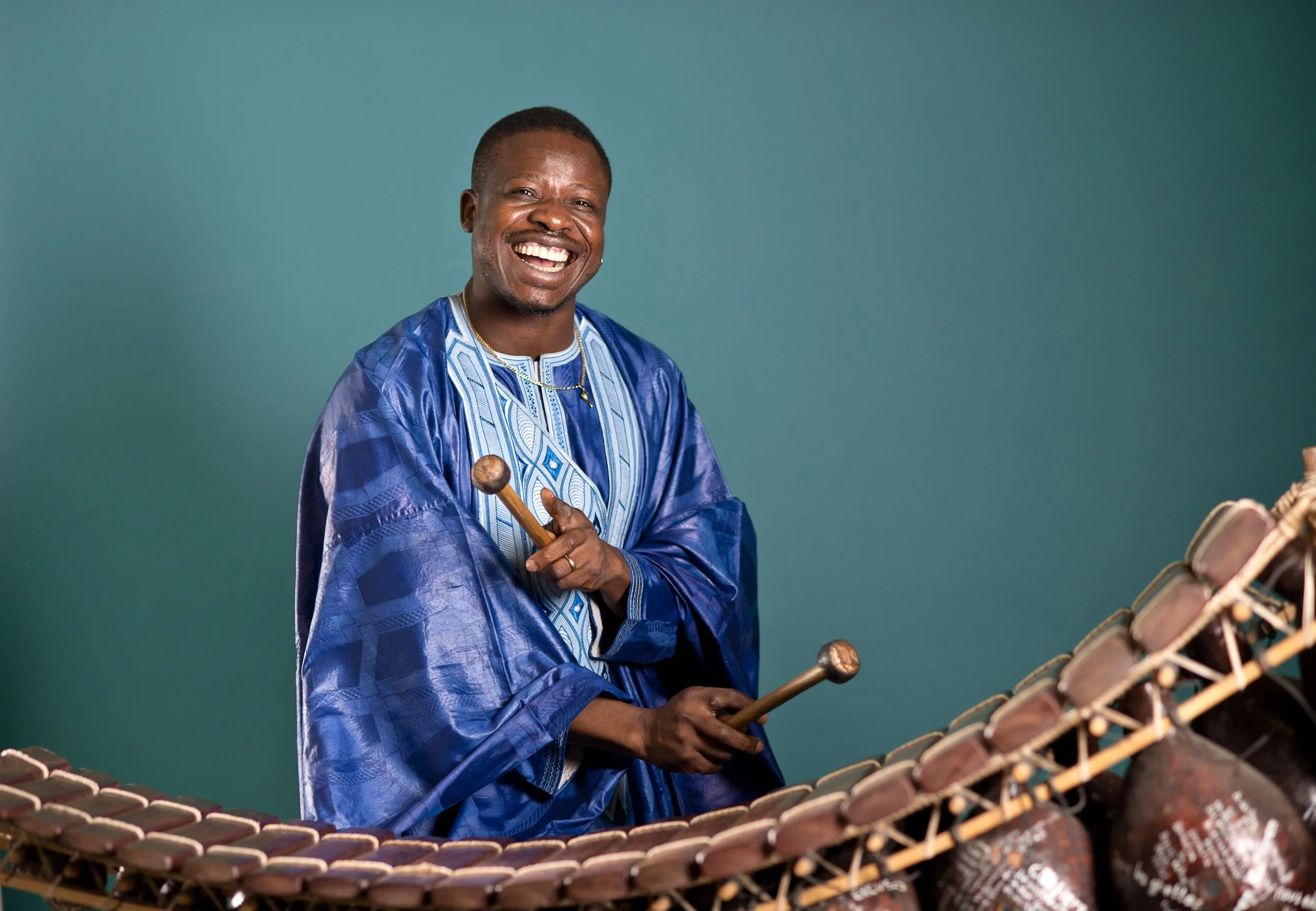
balafon master
Boston, Massachusetts and New York, New York
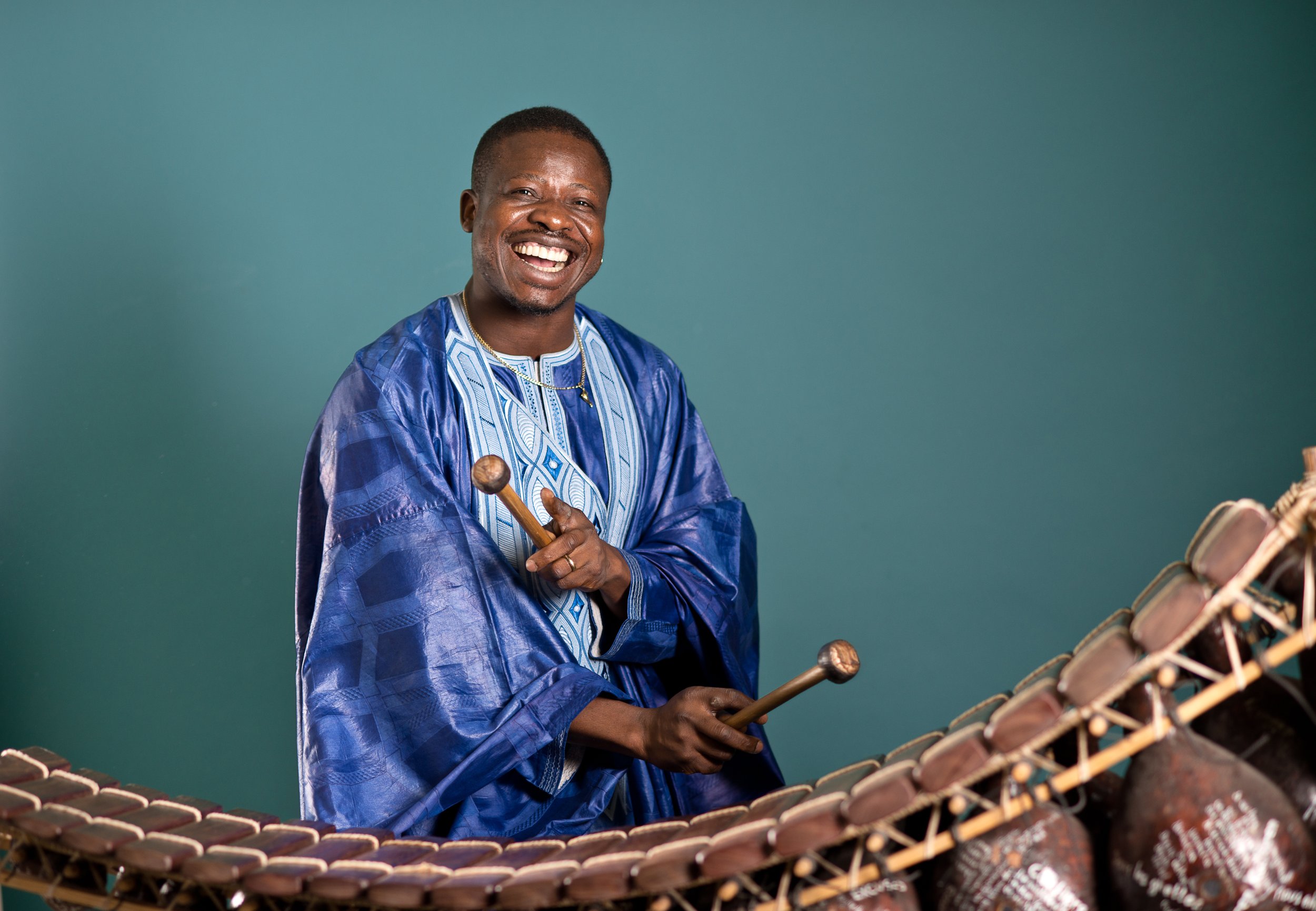
Photo courtesy of artist
Mamadou Diabaté is a master of the balafon, the West African wooden xylophone at the heart of a musical tradition that traces its roots back over 800 years. Joined by his award-winning, percussion-forward band, Percussion Mania—Idrissa Kone (drums, calabash), Jens Pierre (bass), Sayon Camara (vocals), Mamadou Konate (djembe), and Saidou Sangare (guitar)—Diabaté is hailed for expanding the possibilities of balafon through his virtuosity, dynamism, exuberance, and spirit of musical exploration.
Diabaté was born in Burkina Faso in 1973 into a storied family of djelis, also known as griots, the hereditary traditional musicians, storytellers, and genealogists of the Mandé people. Once the confidants of kings and fixtures of royal courts, the Diabaté lineage can be traced back to the founding of the Malian Empire in the 13th century BCE. Mamadou’s own people, the Sambla, live on the border between the Mandé and the Gur cultures in Burkina Faso, a region that produces some of West Africa’s finest balafon players. The instrument itself is the predecessor of the vibraphone and xylophone, made entirely of wood, sinew, and rope, with hardwood keys laid over rows of calabash gourds that act as resonators. When played with wooden mallets by a master musician, the balafon is a surprisingly melodic percussion instrument. The Sambla are known for making their balafons “talk,” uncannily mimicking human speech.
Mamadou’s music education began at the age of five, under the tutelage of his father Peneque Diabaté. One of the greats of the Sambla balafon, Peneque introduced him to the unique repertoire and ornamented solos for which the region is famous. Later, Mamadou apprenticed with other masters from neighboring regions. When he was 11, he defied his family and ran away from home to the musical hotbed of Bobo Dioulasso, Burkina Faso’s second-largest city. There he played in neo-traditional groups such as the Frères Coulibaly, and learned new instruments such as the ngoni (hunter's harp), lunga, and djembe. Three years later, Mamadou reconciled with his father and began playing in Peneque’s ensemble; in 1988, they won first prize at the arts competition during Burkina Faso’s National Culture Week. Mamadou won this prize again 10 years later as a founding member of Burkinabé traditional music ensemble Landaya, his first group, which featured him as principal composer and balafon player.
Diabaté emigrated to Vienna, Austria, in 2000, where he quickly founded his own label and released his first solo album, Sababu Man Dogo. Mamadou was the first artist to record the Sambla’s balafon repertoire outside of Burkina Faso, and has since recorded 13 albums. Driven by his seemingly limitless curiosity, he’s become an in-demand performer known for collaborating across traditions. Over two decades, he has won numerous awards and accolades, including being made a Knight of the National Order of Burkina Faso in 2016, and receiving the country’s “Best International Artist” award in 2019. Onstage, Mamadou is a force of nature, playing with a speed and precision that create the illusion of three musicians playing together, living up to the Diabaté’s unparalleled reputation.