
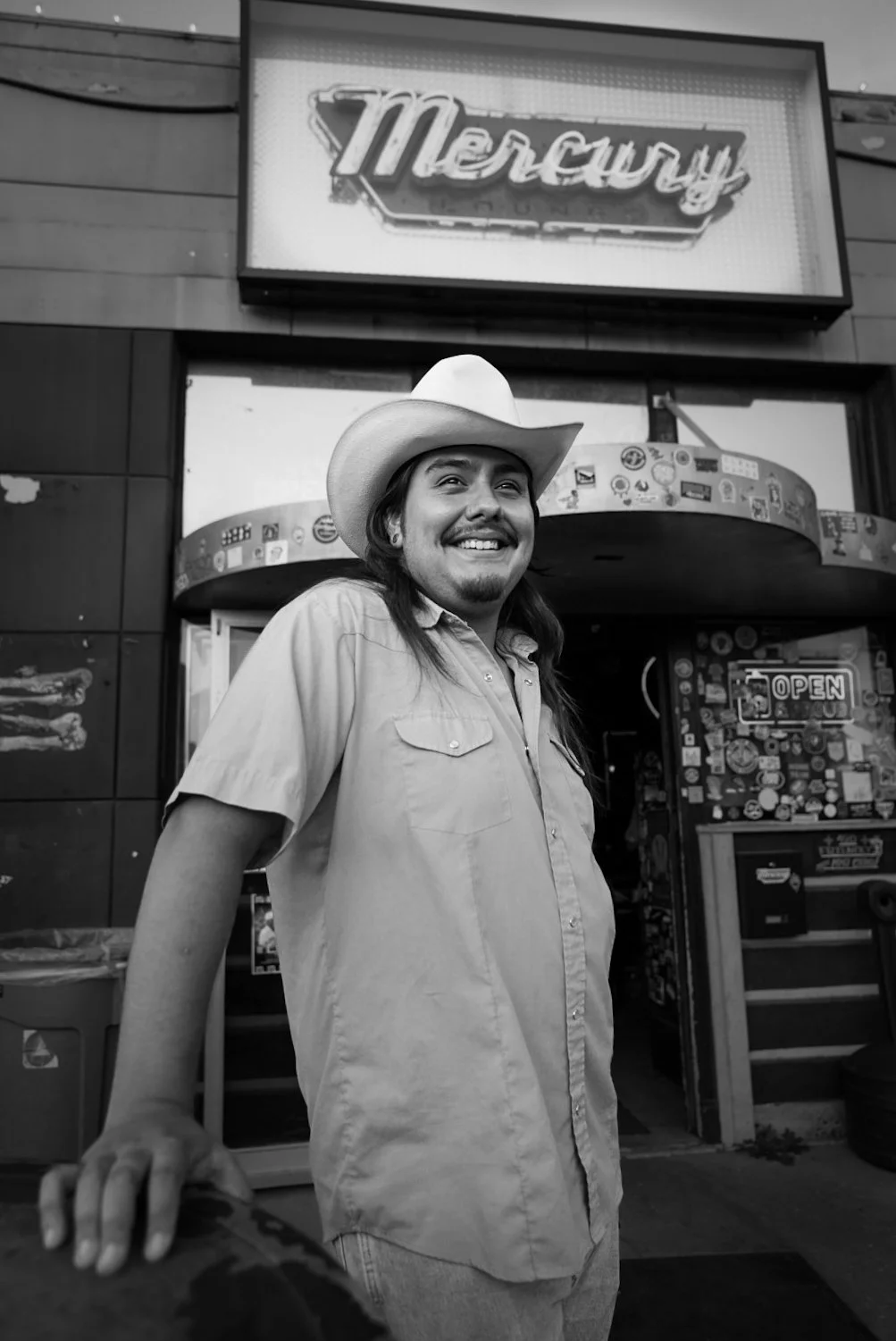
Agalisiga "Chuj" Mackey is keeping the language alive
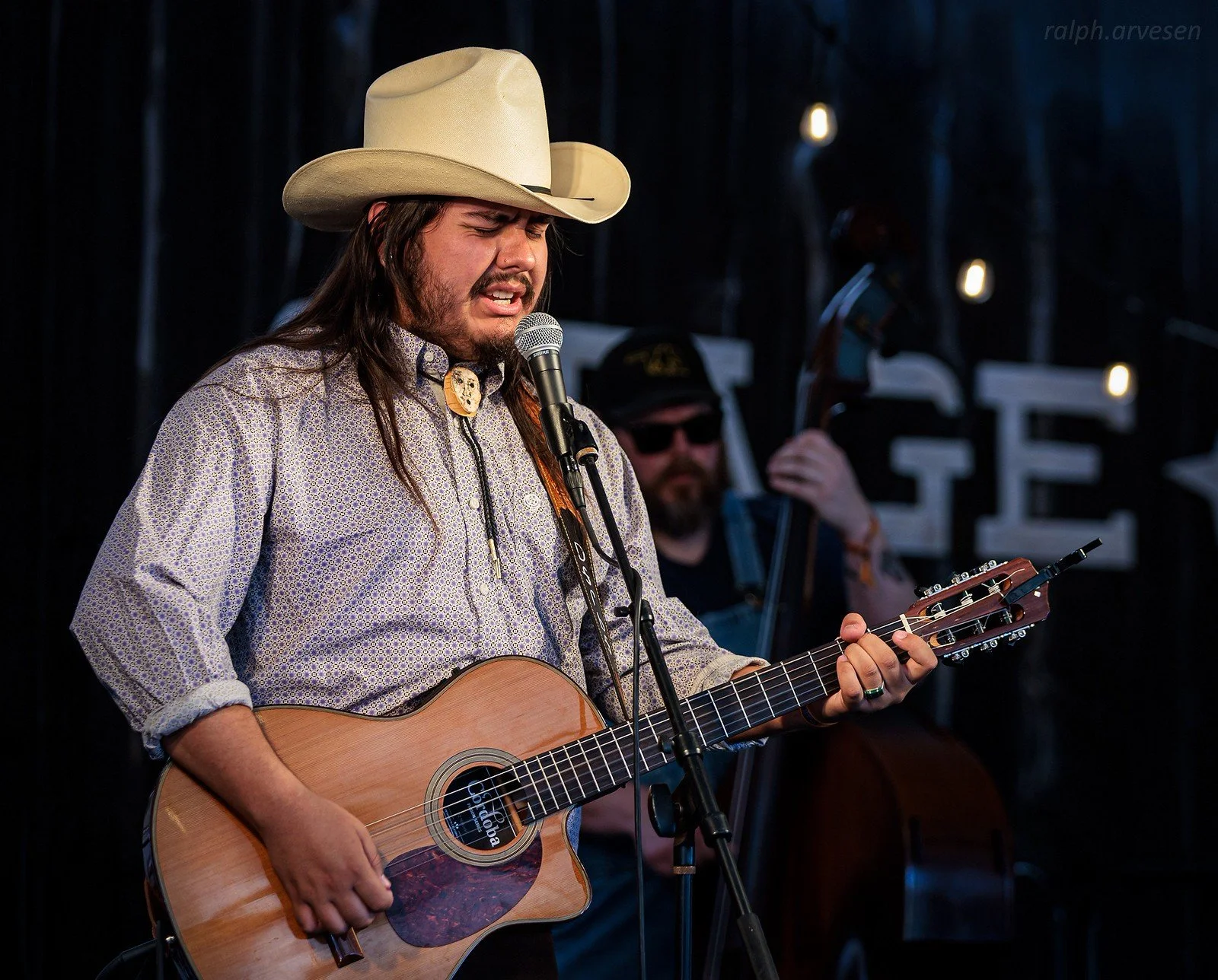
Photo courtesy of artist
By Don Harrison
The Richmond Folk Festival is famous for showcasing artists who specialize in rare and disappearing cultural traditions, but it's safe to say that the three-day folklife celebration has never presented anyone quite like Agalisiga Mackey.
"I think I'm the first to go out and showcase the language in this way," says Mackey, better known as "Chuj." "There may have been others performing country music in the Cherokee language, like someone's uncle, but they probably never performed in front of an audience."
“I think I’m the first to go out and showcase the language in this way. There may have been others performing country music in the Cherokee language, like someone’s uncle, but they probably never performed in front of an audience.”
Hailing from Salina, Oklahoma—not far from Kenwood, where he was born—Mackey's downhome country sound evokes the best in old-time and swing, adorned with mandolin, steel guitar and an authentic rootsy twang. His intimate vocal burr is reminiscent of honky tonk legends like Merle Haggard, but it can soar into a mournful yodel, not unlike country pioneer Jimmie Rodgers (he claims both performers as personal heroes).
Listen closely and you'll hear something else. Mackey is singing his country songs in another dialect entirely—Tsalagi, the indigenous Cherokee language.
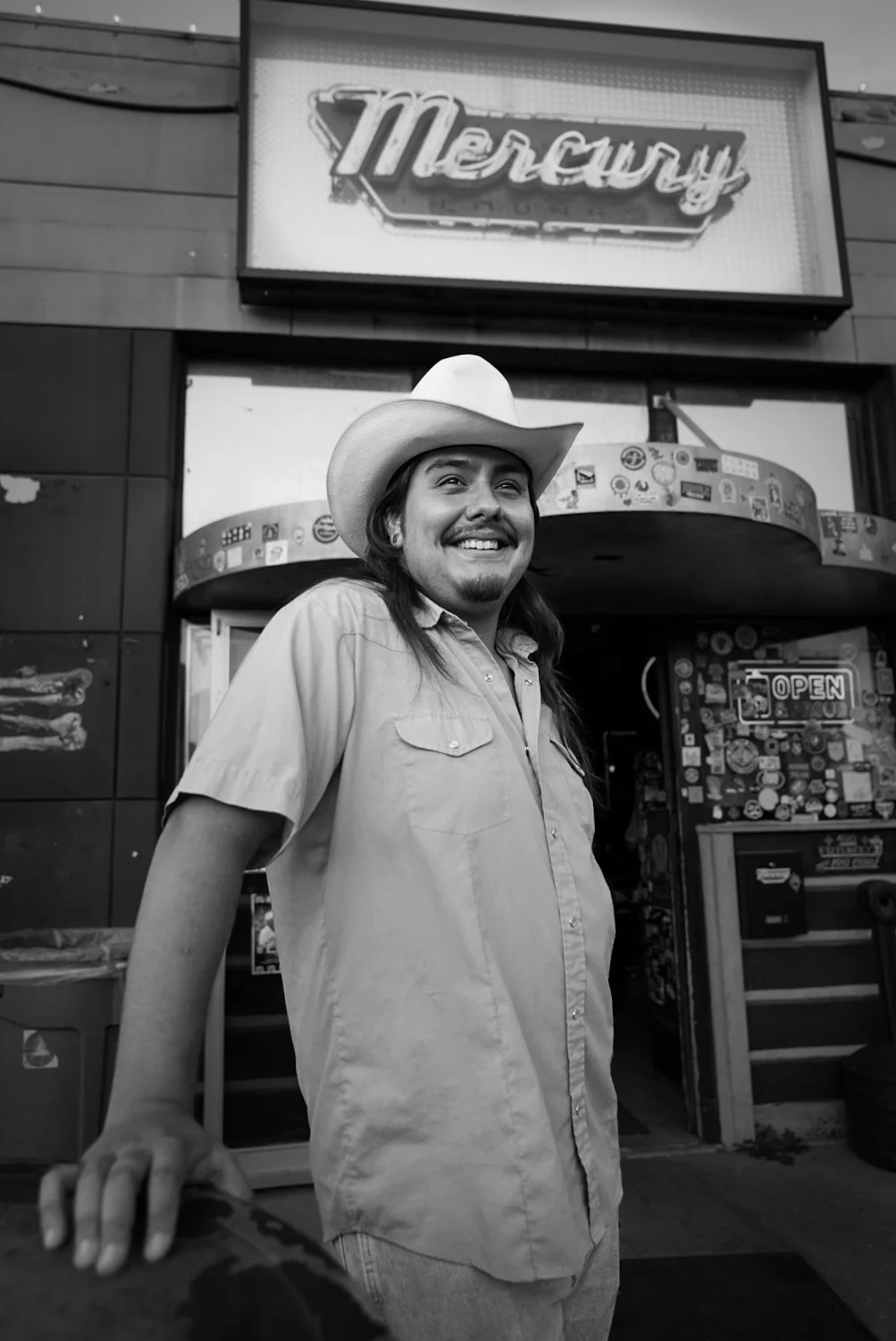
Photo courtesy of artist
“A young man with an old soul”
"It was my first language," says the 22-year-old musician and educator, who grew up on the reservation. "I spoke it for the first three years of my life. But when I started school, and this is kind of funny because I went to a Cherokee immersion school, I started learning the majority of my English because all the other kids there only knew English. So I had to relearn the language later."
Mackey began playing the guitar during the pandemic, while completing his senior year in high school remotely. "It was just for fun. We needed things to do, so me and my family would play country tunes."
His family had always loved country music but, growing up, Chuj was exposed to all kinds of sounds. His dad, Ryan, had even performed in heavy metal bands. "Early on, for me, it was traditional and ceremonial songs for Cherokees, but I'd sing along to the songs on the radio. My mom, she listened to everything around the house... James Brown, Willie Nelson, Old Crow Medicine Show, Metallica..."
Mother Dawnena "Danni" Squirrel, who serves as a Cultural Outreach Officer with the Cherokee Nation (and is Chuj's biggest fan), started making videos of her son's performances and posting the clips to Facebook, where a family friend, Jeremy Charles, saw them. "Jeremy was working with my dad on a language project, and he asked him if I would be interested in writing a country song in the language. I was 17 at the time. I never wrote a song until he asked me to."
At the time, Charles was putting together Anvdvnelisgi, a compilation of indigenous Native American performers singing in the ancient Cherokee language, trafficking in contemporary music genres ranging from hip-hop to reggae to hard rock to country. The 2022 album was an effort to revitalize the endangered Iroquoian dialect, nearly eradicated by decades of (sometimes enforced) assimilation, and used today by fewer than 2,000 native speakers, most in Oklahoma and North Carolina.
Mackey recalls that this first song, "Gatlohiha," or "Cherokee Yodel," came easily, but that may have been because he didn't really know what he was doing. "It was still early on in my language learning journey and so my dad helped me a lot. I wanted to pay tribute to Jimmie Rodgers because, to me, that's where [country music] started."
Jeremy Charles, a Cherokee citizen from Oologah, Oklahoma, recognized Chuj's potential from the moment he saw those early video clips. He calls him a young man with an old soul. "He's got a presence, and either you have it or you don't," the Tulsa-based film producer and photographer told Osiyo TV interviewer Jennifer Loren. "It's really been a privilege to watch Chuj grow as an artist and embrace his role. His mission as a musician is to further the language and he's taken it on. He knows what influence he can have over young speakers."
“His mission as a musician is to further the language and he’s taken it on. He knows what influence he can have over young speakers.”
Mackey continued to write original country songs in the language, and in the process, began learning Cherokee all over again. "I wrote them with words in our language and concepts that I didn't fully understand so I would teach myself through the songs. And then somewhere along the way I thought that maybe other people could do the same thing with the language and learn Cherokee this way."
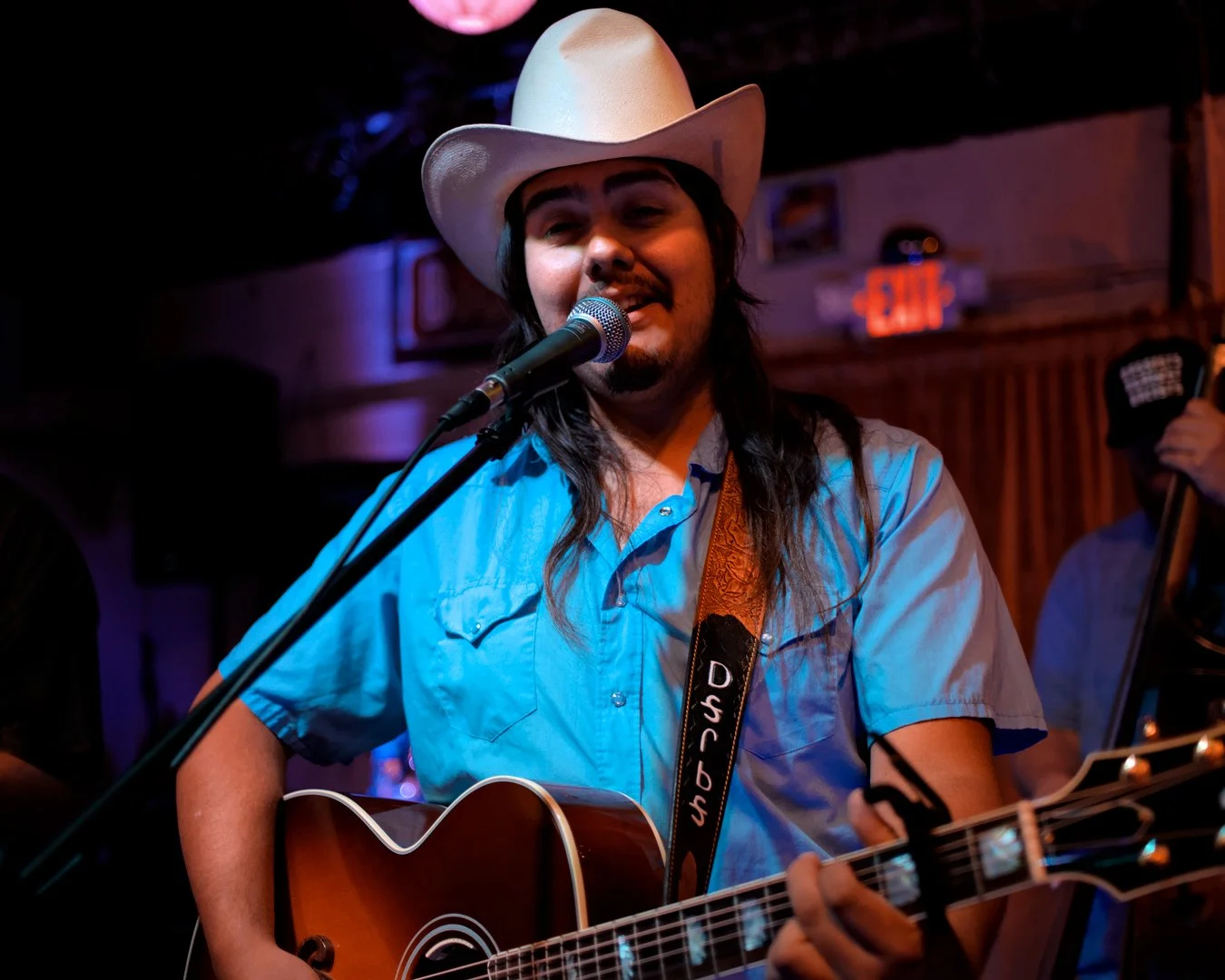
Photo courtesy of artist
It started in the woods
After he graduated from Sequoyah High School, Chuj joined the Cherokee Language Master Apprenticeship program and eventually landed a job as an educator at the Cherokee Immersion Charter School in Tahlequah, where he works today. "I started writing songs for kids but also for adult language learners, with more adult themes."
Many of those tunes were included on his debut album, Nasgino Inage Nidayulenvi (It Started in the Woods), which was released in 2024 on Horton Records. The disc manages to fuse traditional Native American concepts of family ("Tsitsutsa Tsigesv" or "When I was a Boy") and nature ("Ahyvdawalohi" or "Thunder") with plaintive country ballads ("Daganigisi" or "I'm Gonna Leave"). This uniquely American synthesis makes one reconsider the entire concept of "roots" music. The album also includes covers of songs by Hank Williams ("I'm So Lonesome I Could Cry") and Bob Dylan ("I Shall Be Released"), reimagined through the Cherokee dialect.
Mackey says that translating Dylan's wordy, surrealistic lyrics was a real challenge, while Hank's classic lament was relatively straightforward. "A lot of it is grammar," he says, "and some of it is different ways of looking at a situation. For example, country music talks a lot about heartbreak. That term 'heartbreak' is tricky. We don't have that idea because the language is very literal. So heartbreak literally means, like, squishing an organ. [Cherokee] speakers will have different words that capture that idea of heartbreak."
Dylan must have liked his interpretation, as Mackey was asked to perform "I Shall Be Released" at the 2022 grand opening of the Bob Dylan Center museum in Tulsa. "It was a hard song to translate because it's full of poetry and imagery," he says. "All of his lyrics could have double meanings, and you ask, 'what exactly is he talking about?' There's a lot of what ifs and maybes, a lot of things left open. But the [Cherokee] language doesn't work that way. The speaker of the language knows what they're talking about. And if they don't, it is very explicit in the sounds, the inflections being used. Those little inflections can make all the difference."
But it takes a village to write a Cherokee country song. Whether he's crafting an original tune or interpreting a cover, Mackey will go to his family or to tribal elders for assistance. "I always get my songs checked by people that talk better than me," he says. "I want the songs to be not only understandable, but actually something that a speaker might say."
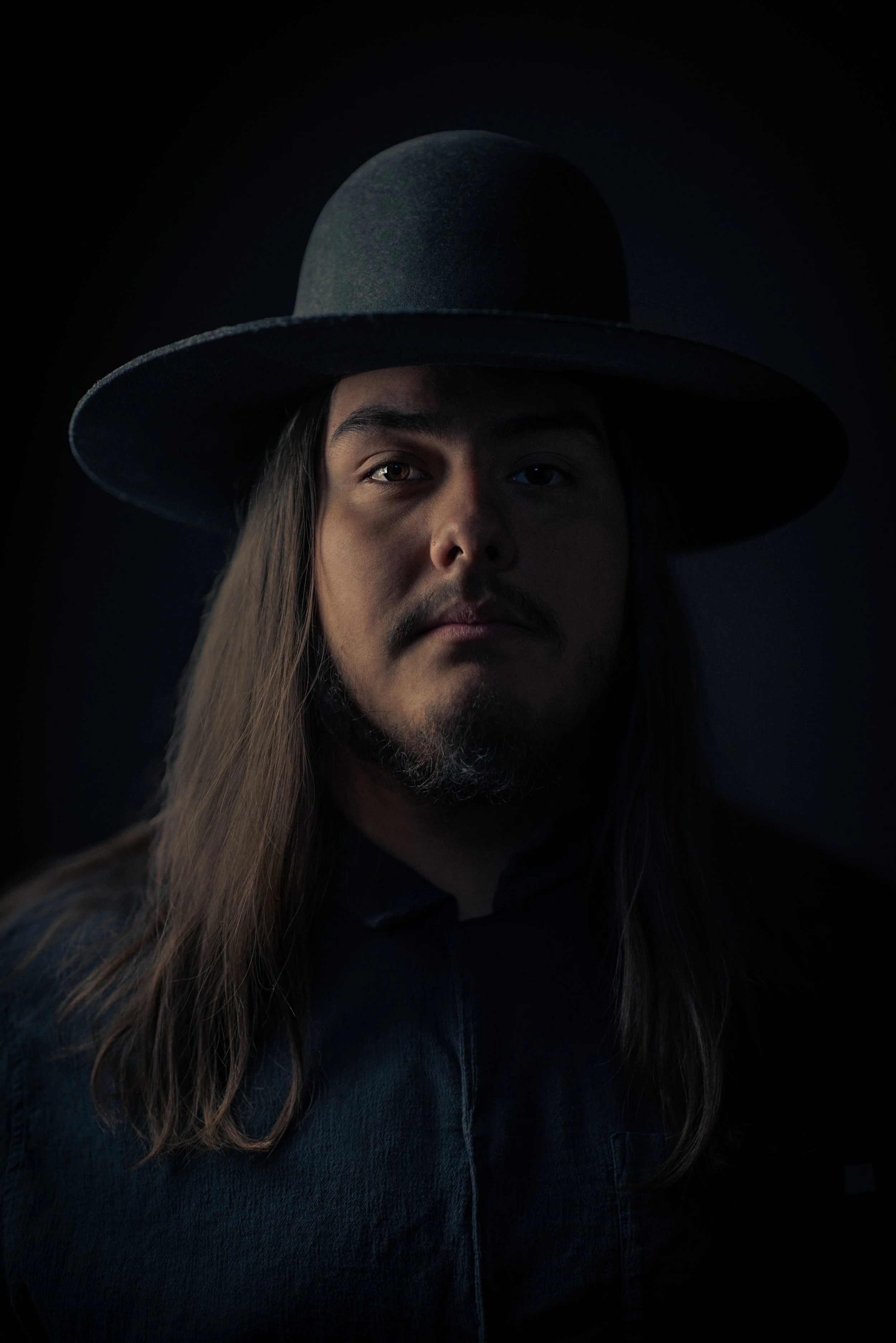
Photo courtesy of artist
A little corner of heaven
Word is getting around about the unique music maker, who strikes quite a picturesque pose in his long hair and wide-brimmed hat. "When I Was a Boy" was included on the soundtrack to the FX television show, "The Lowdown," and he performed solo last year before enthusiastic audiences at his first ever folk festival, the Brooklyn Folk Festival. In Richmond, where he makes his debut at a festival programmed by the National Council for the Traditional Arts, he'll perform with a backing band. "I don't mind performing solo but I really like a band," he says.
Mackey's group includes Johnny Carlton on bass, Zach Annet on drums, his uncle Lyle Deiter (who helped to teach him guitar) on mandolin and harmonica, and lead guitarist and lap steel player Jared Tyler, who also produces Mackey's recordings.
Chuj has a second album awaiting release, another set of Cherokee country originals. It was recorded at the Ripley Farmhouse, a Tulsa studio built by the late Steve Ripley of the country band the Tractors, and includes a cover of Merle Haggard's "Silver Wings." In honor of his Mexican-American wife Paloma Lopez, there's also a Mexican corrido that he translated into Cherokee, "Pedacito de Cielo," or "A Little Corner of Heaven."
Chuj says that he's humbled by how warmly his music has been received, not just by outside audiences but within the Cherokee Nation itself. "Everywhere I go and do these songs in the language, I'm never asked to translate them or to change how I'm doing it or to make it more understandable. It's always just been accepted for what it is." He adds this is very important to him. "There's a way of giving in to mainstream society and compromising the naturalness in order to make it digestible for others. But that's never been the case for what I've done, and I'm grateful."
“There’s a way of giving in to mainstream society and compromising the naturalness in order to make it digestible for others. But that’s never been the case for what I’ve done, and I’m grateful.”