
Puerto Rican bomba
San Juan, Puerto Rico
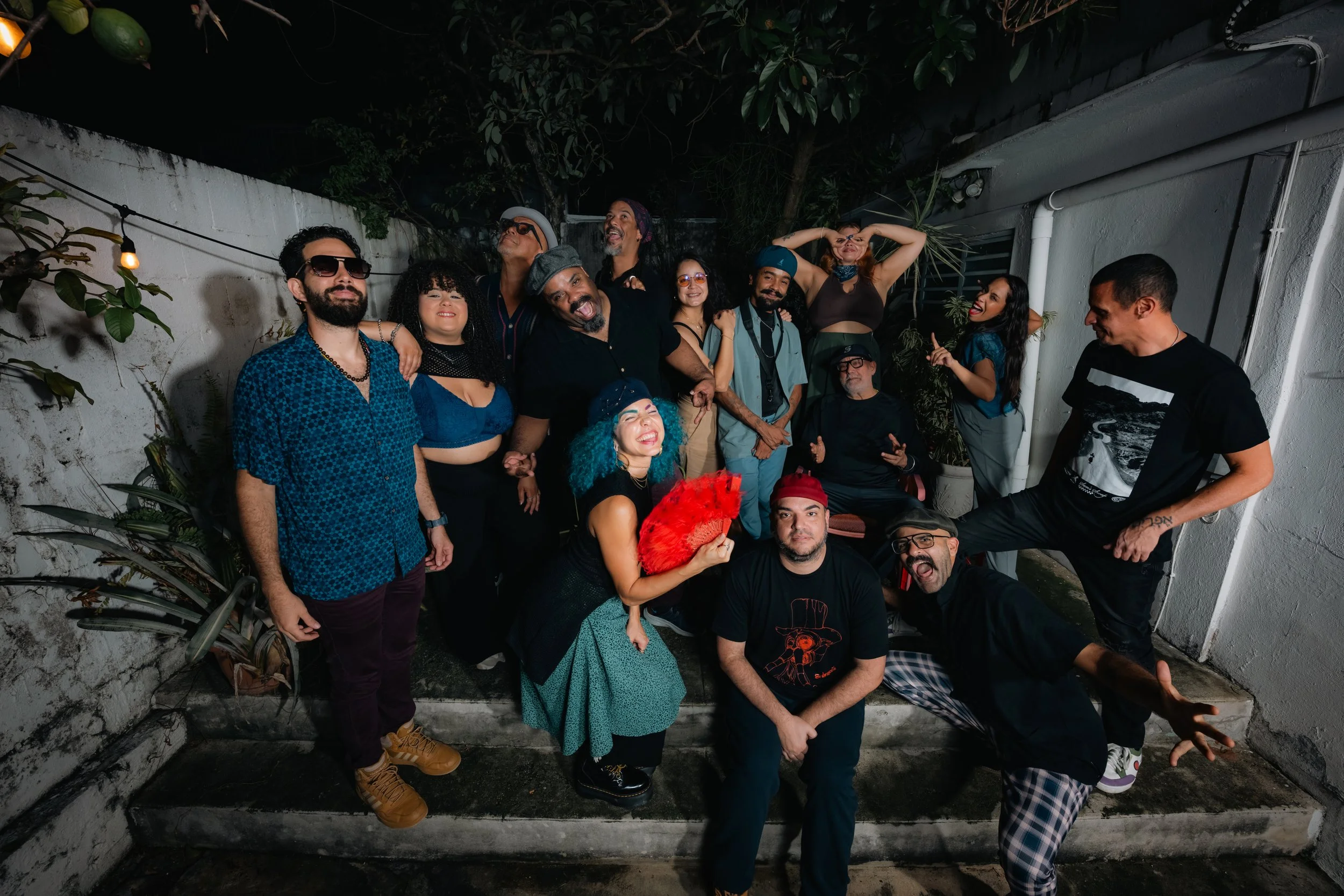
Photo courtesy of Alex Diaz
Direct from his hometown of San Juan, Puerto Rico, Héctor “Coco” Barez, an adopted son of Richmond, brings his startling and newest offer—El Laberinto del Coco—to Richmond audiences. Deeply rooted in tradition, Coco’s proposition embellishes the heart of bomba with a horn section and a full band that explode with energy, playfulness, and an irresistible invitation to dance. Fresh off a U.S. tour that included Carnegie Hall’s summer series and World Music Festival Chicago, Barez is grateful to bring bomba back to the Richmond community that, he explains, “has always embraced me and supported me.”
Bomba is a music and dance form that first emerged during the late 17th century among enslaved Africans on Puerto Rico’s sugar plantations under Spanish colonial rule. The heavily percussive music and dance was a communal celebration—but also expressed often-coded messages of resistance. Bomba is a dialogue among its singers, dancers, and percussion instruments, including: the barriles, large drums originally made from pickle, codfish, or rum barrels; a maraca crafted from a gourd; and a pair of sticks called cuá. This interplay creates a sound that is distinctly Afro Taino, reflecting its roots in Puerto Rico’s African and Indigenous cultures.
Héctor “Coco” Barez grew up in a musical household, but it wasn’t until college that he fell in love with playing traditional Puerto Rican music. His sister, Ana Milagros Barez, was dancing with La Familia Cepeda—premier bomba proponents credited with reviving the tradition—and she told him the troupe needed male dancers. Barez preferred the idea of drumming, but he seized the Cepeda’s invitation to join, and over the next three years dancing with the group, he also learned percussion in the traditional manner: “by word of mouth, or sitting next to an elder, or watching, because that’s the way everybody learned, by imitation.” Barez went on to study with other bomba luminaries including Los Hermanos Ayala. He brought his percussive talents into a wide variety of Puerto Rican musical contexts, performing in groups as varied as Calle 13 (rapper Residente’s original band) and the Areyto National Folk Ballet. When he moved to Richmond, Barez was a key member of local stalwarts Bio Ritmo and Miramar. In 2020, after more than a decade in Richmond and Washington, D.C., Barez returned to the island to care for his aging mother, and this homecoming soon created new musical opportunities.
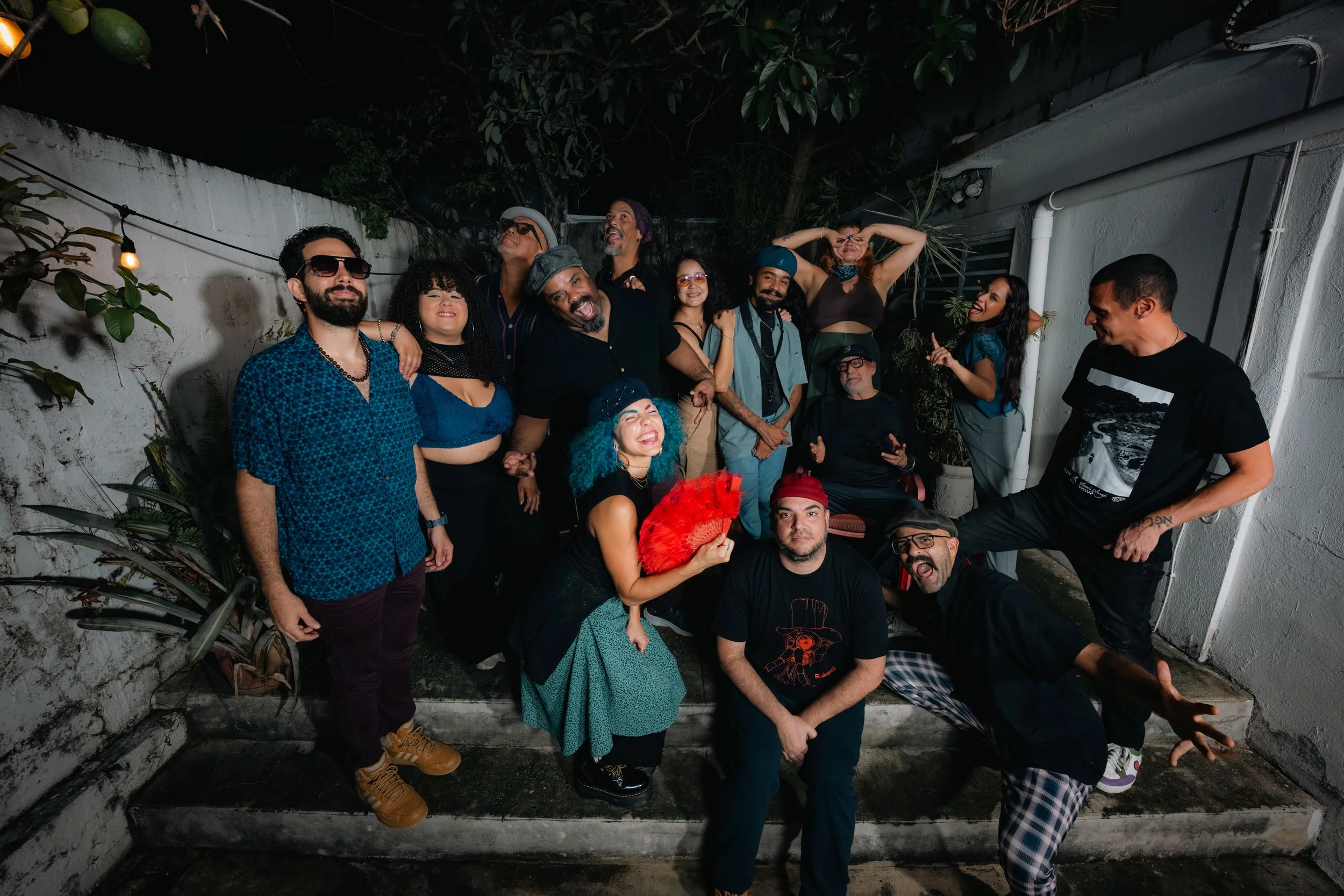
El Laberinto del Coco is Barez’s latest triumph. The 15-piece bomba ensemble (they count their sound man as a musician along with the 14 on stage) is an all-star, intergenerational line-up of Puerto Rican musicians and dancers ranging in age from their 20s to their 70s. The group counts on Puerto Rican musical icon Jerry Medina as cantaor (lead singer of a bomba ensemble), bringing his wit and humor on stage. A quartet of cantaoras (female singers) put on a stellar showcase of vocals and bomba dance steps to the meter of a dazzling percussion and horn section and band. The group’s name plays both on Barez’s nickname, Coco, and the Puerto Rican slang association of the coconut with the human head; a translation might be “the labyrinth of the mind,” aptly reflecting the groups’ endeavor to push the boundaries of bomba while staying true to its roots. Via this map of Barez’s fertile imagination, El Laberinto del Coco takes audiences on a joyous tour through the creative landscape of bomba music, influenced by salsa, reggae, and bachata.