
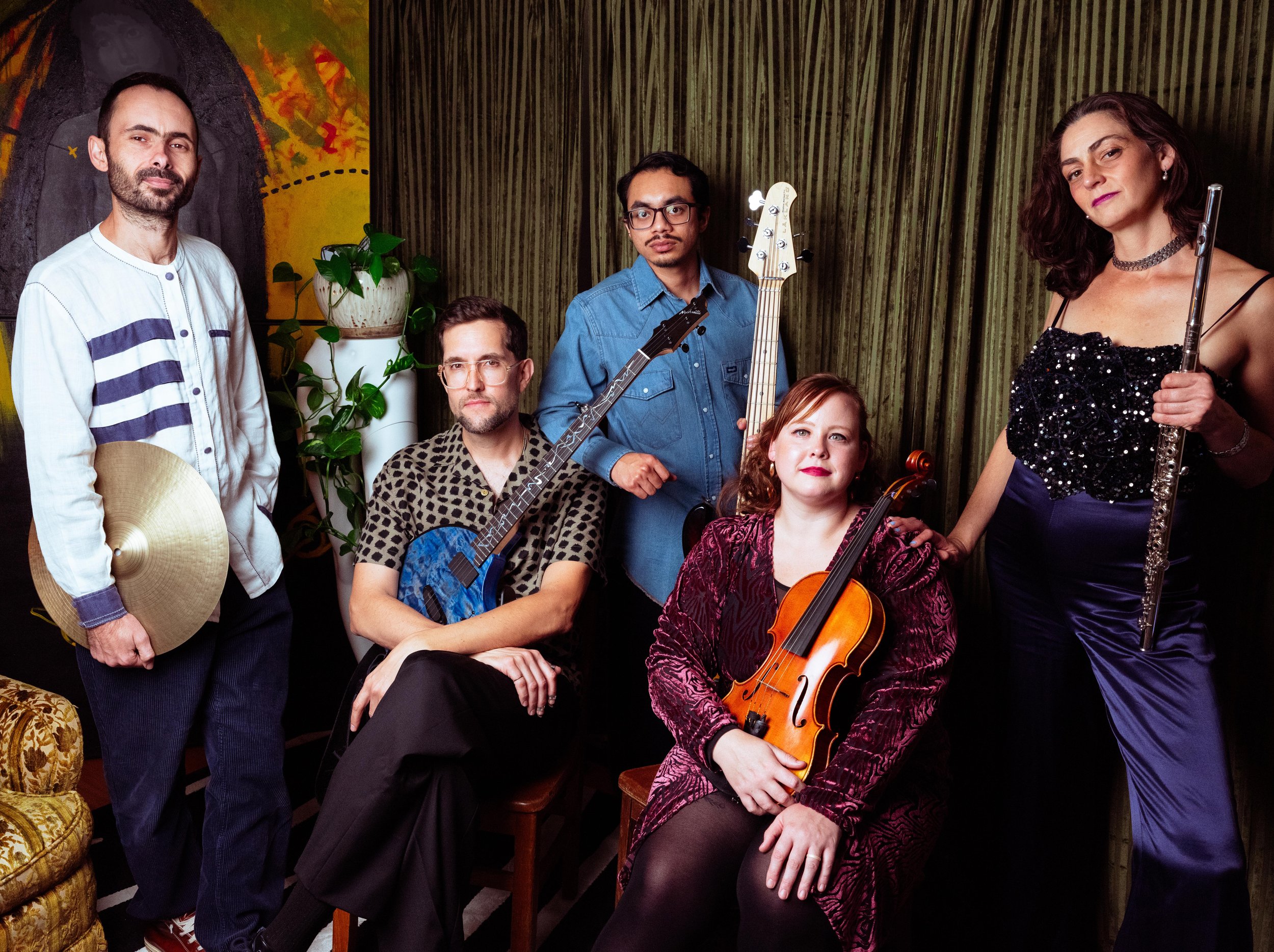
Visionary Folk
Durham, North Carolina
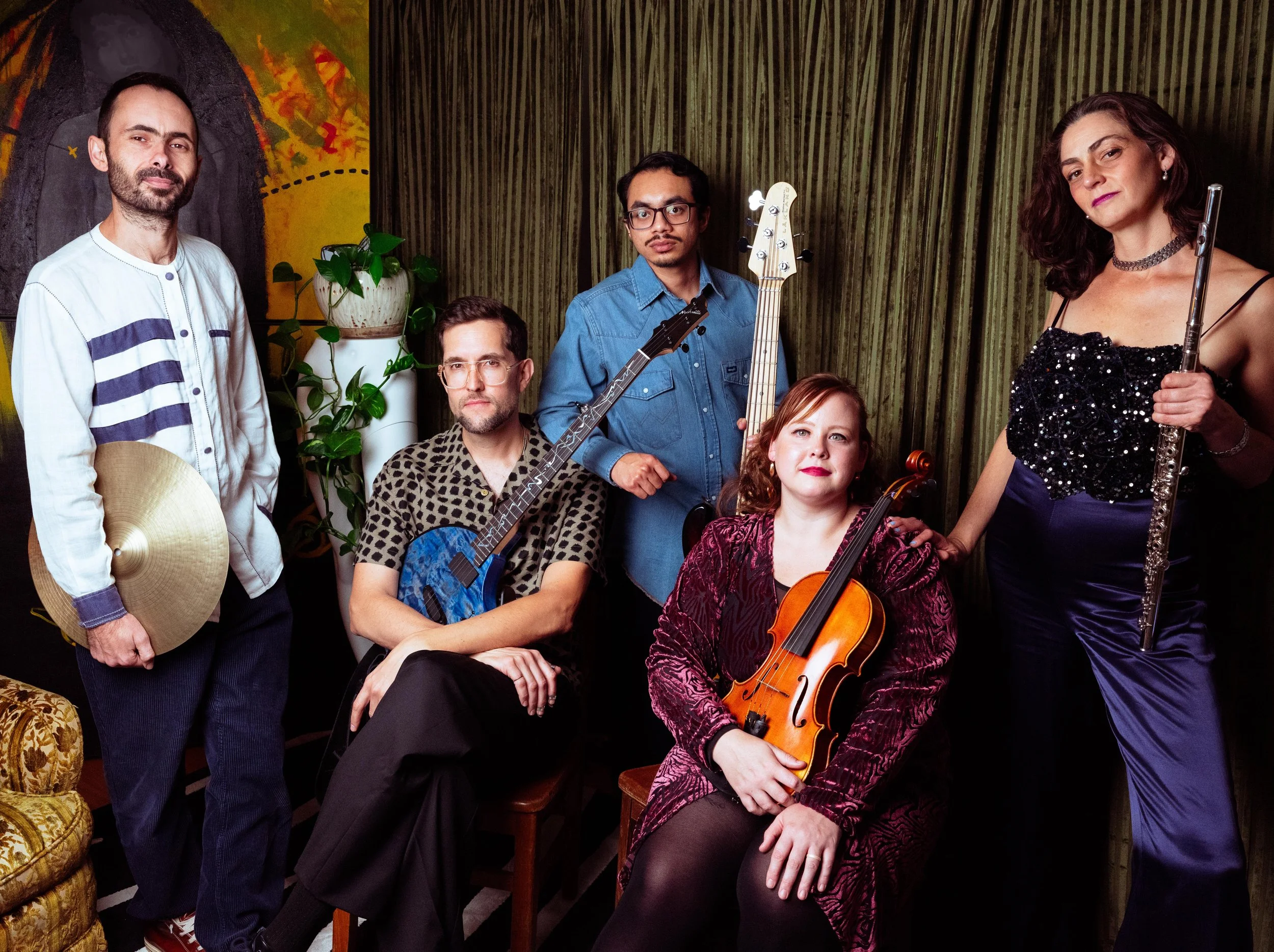
Photo courtesy of artist
Multi-instrumentalist Joe Troop grew up in Winston-Salem, North Carolina, and became immersed in bluegrass and old-time music. His path then took him abroad to Spain, Japan, and ultimately Buenos Aires, where he spent roughly a decade as a musician and teacher. In Argentina, he founded Che Apalache with three of his students, developing what became known as “Latingrass:” Latin American folk influences played through the instrumentation and vocabulary of an Appalachian string band. The group's Rearrange My Heart, produced by banjo legend Béla Fleck, earned a 2019 Grammy nomination for Best Folk Album.
That international experience is important to understanding his new project, Joe Troop’s Whirlwind, of which the most intriguing element may be the custom electric jazz banjo. The banjo is so strongly associated with bluegrass, old-time music, and Americana that hearing it in an electric, jazz-oriented setting immediately changes the instrument's possibilities. Rather than treating the banjo as a fixed symbol of a particular genre, Troop uses it almost as a laboratory: an instrument capable of taking on the roles normally occupied by electric guitar, jazz guitar, or other lead instruments.
And the ensemble surrounding him is deliberately unconventional. Rebecca Kleinmann's flute, Bailey Newman's viola, Gaston Reggio's drums, and Ramon Garcia's bass create a palette that is considerably broader than a conventional string-band setup. The combination gives Troop room to move between tightly arranged passages and improvisational sections, with the banjo functioning not simply as accompaniment but as a central melodic and textural voice.
In Whirlwind one can hear elements of Latin jazz, R&B, candombe, bluegrass, classical music, samba, and rock and roll. These aren't genres that normally appear together in a single sentence, which is precisely the point. Candombe can bring a strong Afro-Uruguayan rhythmic vocabulary; samba introduces another approach to groove and syncopation; R&B and jazz open the door to harmonic sophistication and improvisation; bluegrass contributes the banjo's rapid articulation and string-band sensibility; classical music can inform arrangement and interplay; and rock supplies another dimension of energy and electric sonority.
The result is less a conventional “fusion” project than a collision of musical languages. Troop's background gives him a grounding in traditional American string music, while his years in South America have made rhythmic complexity and cross-cultural collaboration fundamental to his musical identity. Troop isn't simply adding Latin rhythms to bluegrass or putting an electric pickup on a banjo. His musical language has been shaped by years of moving between traditions—listening, teaching, collaborating, and absorbing different approaches to rhythm, melody, harmony, and improvisation. Like his current work with Larry & Joe, which brings together Troop's Appalachian background with Venezuelan llanera music, Whirlwind continues his fascination with the musical connections between cultures.
Whirlwind seems designed to let all of those influences coexist without requiring any one of them to dominate. The music is intended to feel kinetic, unpredictable, and constantly in motion, moving from groove to melody, from acoustic tradition to electric experimentation, and from one cultural influence to another. Troop himself describes Whirlwind as an “electric banjo fusion defying categorization.”